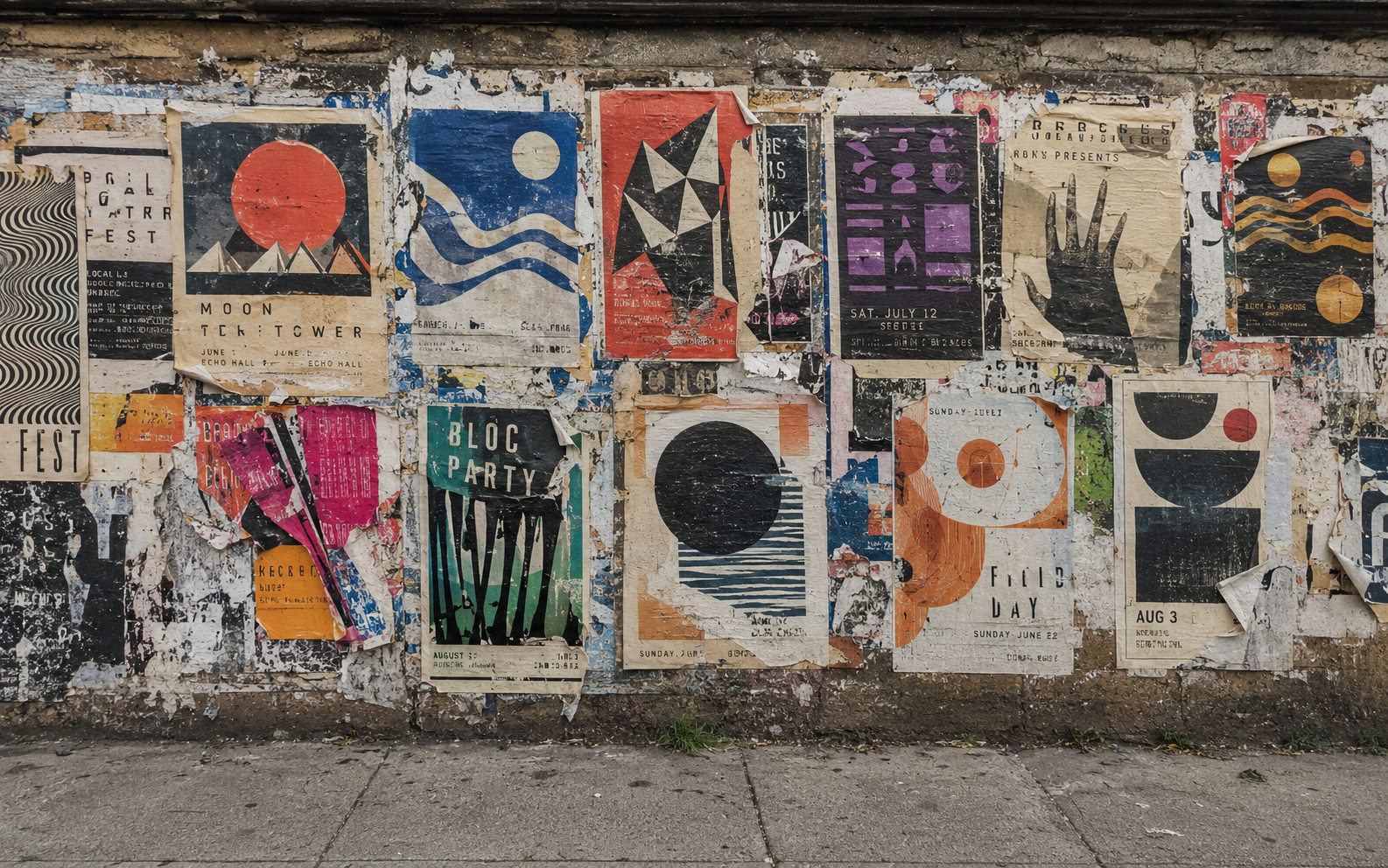
Walk through any major city and you will find them — layers of posters pasted over one another on construction hoardings, telephone poles, and alley walls. Some are fresh, ink still sharp and colors vibrant. Others are half-torn, their edges curling upward to reveal fragments of whatever came before. This is poster art in its natural habitat: temporary, democratic, and stubbornly present.
The poster is one of the oldest forms of mass visual communication, predating radio, television, and the internet by centuries. And despite the rise of digital advertising, the physical poster remains a vital medium for artists, musicians, activists, and designers who want their message to exist in real space rather than vanish into a social media feed.
From Toulouse-Lautrec to Telephone Poles
The modern art poster traces its lineage to late nineteenth-century Paris, where Henri de Toulouse-Lautrec and Jules Chéret transformed commercial lithographic prints into something approaching fine art. Their cabaret advertisements were so visually striking that Parisians began peeling them off walls to keep as collectibles — an early form of street art appreciation that foreshadowed today's poster culture by more than a century.
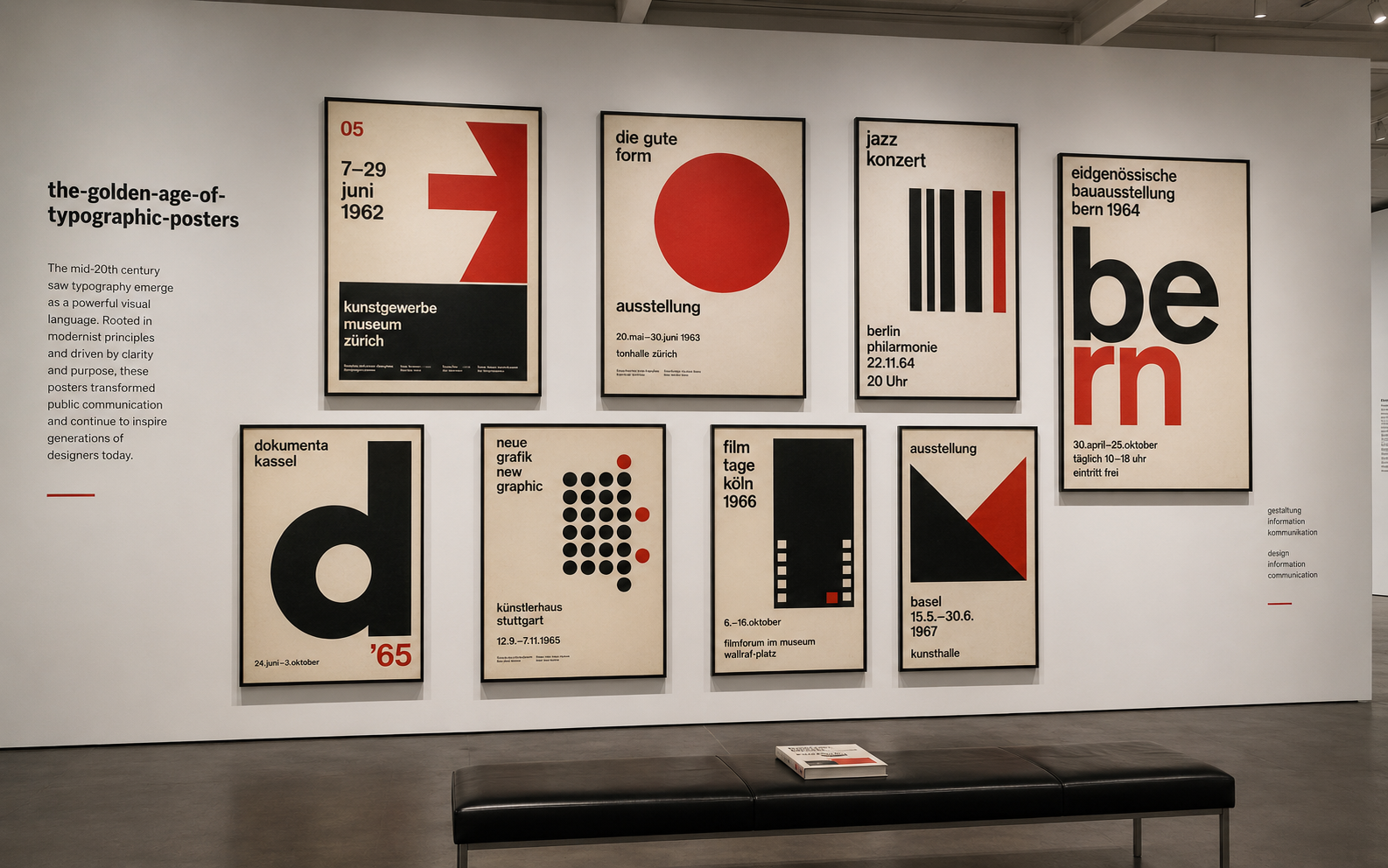
The tradition evolved through the revolutionary posters of Soviet constructivism, the psychedelic concert posters of 1960s San Francisco, and the agitprop wheat pastes of the punk era. Each movement recognized the same fundamental truth: a well-designed poster placed in a public space is one of the most powerful forms of visual communication available. As the It's Nice That's ongoing coverage demonstrates, poster design has been treated as a serious art form by major institutions for decades.
The Gig Poster Renaissance
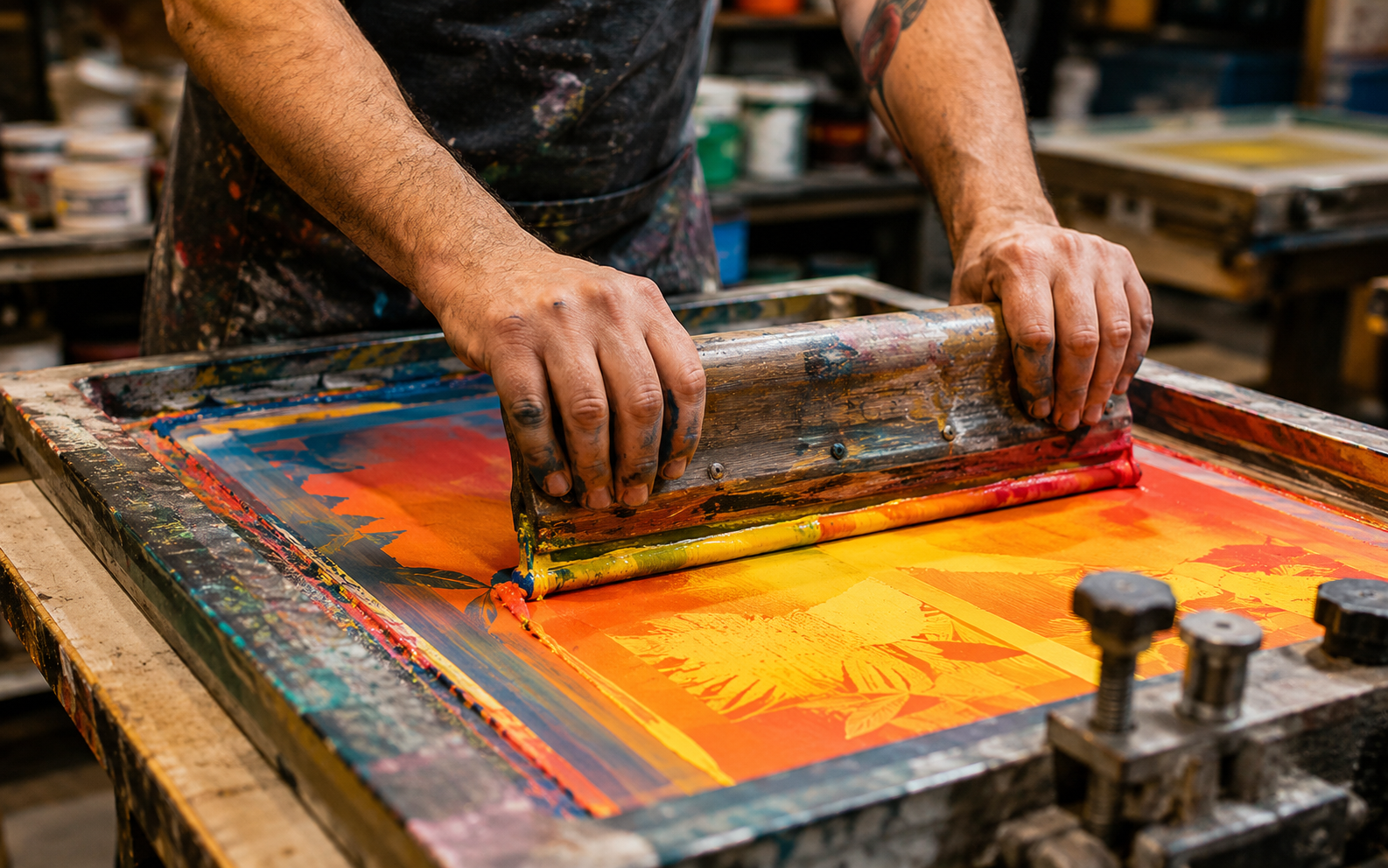
One of the most vibrant corners of contemporary poster art is the gig poster scene. Starting in the early 2000s, a wave of artists began creating limited-edition screen-printed posters for concerts — not as cheap promotional throwaways, but as collectible art objects. Artists like Jay Ryan, Aesthetic Apparatus, and the Decoder Ring Design Concern elevated the form with intricate illustrations, bold typography, and printing techniques that rivaled fine art editions.
These posters function on two levels simultaneously. They are practical objects designed to promote a specific event at a specific venue on a specific date. But they are also standalone artworks that can be appreciated entirely on their own terms, long after the show they advertised has ended.
The Street as Gallery
What makes poster art distinct from other visual media is its relationship to public space. A poster on a wall is not behind glass in a museum or framed in someone's living room. It exists in the weather, subject to rain, sun, and the layers of other posters that will inevitably be pasted over it. This impermanence is not a weakness — it is the point. Poster art is art that accepts its own mortality, that exists fully in a specific moment and place.
There is also something profoundly egalitarian about the medium. You do not need a gallery connection or an advertising budget to put work on public walls. All you need is a design, a printer, and a bucket of wheat paste. This accessibility has made poster art a consistent vehicle for political dissent, community organizing, and grassroots cultural expression.
Why Posters Still Work
In a media environment defined by algorithmic feeds and targeted advertising, the physical poster cuts through noise in a way that digital formats cannot. You cannot scroll past a poster on your commute. You cannot install an ad blocker against a wheat-pasted wall. The poster demands your attention simply by occupying space in the physical world, and that directness is something no amount of digital sophistication can replicate.