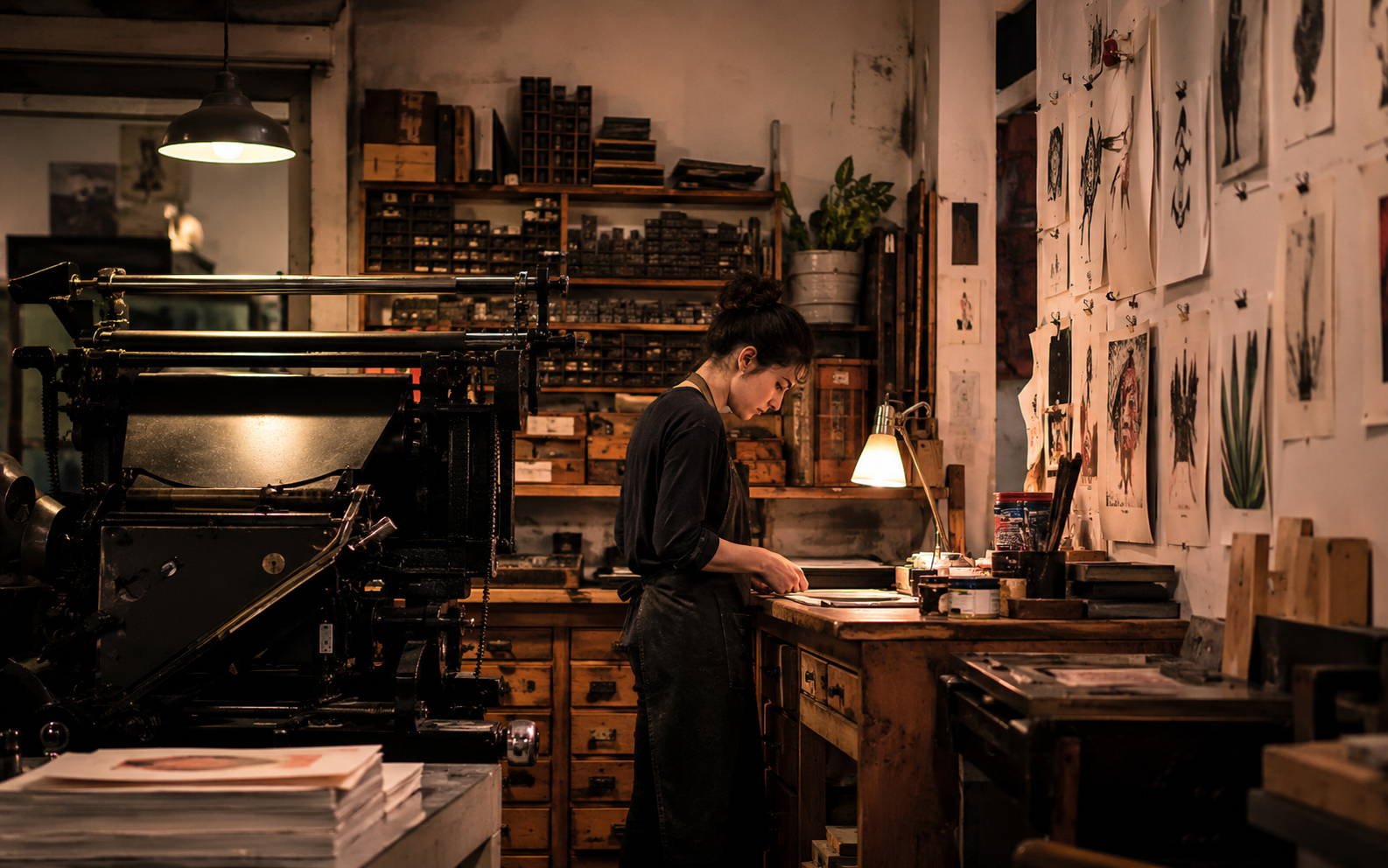
Somewhere between the commercial print houses that churn out millions of identical copies and the solo artist pulling prints in their apartment, there exists a thriving ecosystem of independent print studios. These small operations — often run by two or three people in converted warehouses, storefronts, or backyard sheds — have become essential infrastructure for the contemporary art print world.
They go by different names. Printshop. Atelier. Studio. Press. But the operating model is remarkably consistent: acquire a collection of presses and printing equipment, develop expertise in one or more print techniques, and offer those capabilities to artists, designers, and publishers who need small runs of high-quality printed matter.
More Than Service Providers
What distinguishes the best indie print studios from mere print-for-hire operations is the collaborative relationship they build with the artists they work with. A great print studio does not simply execute files. The printer becomes a creative partner, advising on paper stock, ink selection, color separation, and the dozens of small technical decisions that determine whether a finished print sings or falls flat.
This collaborative model produces work that neither party could achieve alone. The artist brings the vision and the imagery. The printer brings deep technical knowledge of their equipment and materials. The intersection of those two knowledge sets is where the most interesting work happens — where an artist's idea gets translated, refined, and sometimes transformed by the possibilities and constraints of the printing process.
The Equipment Ecosystem
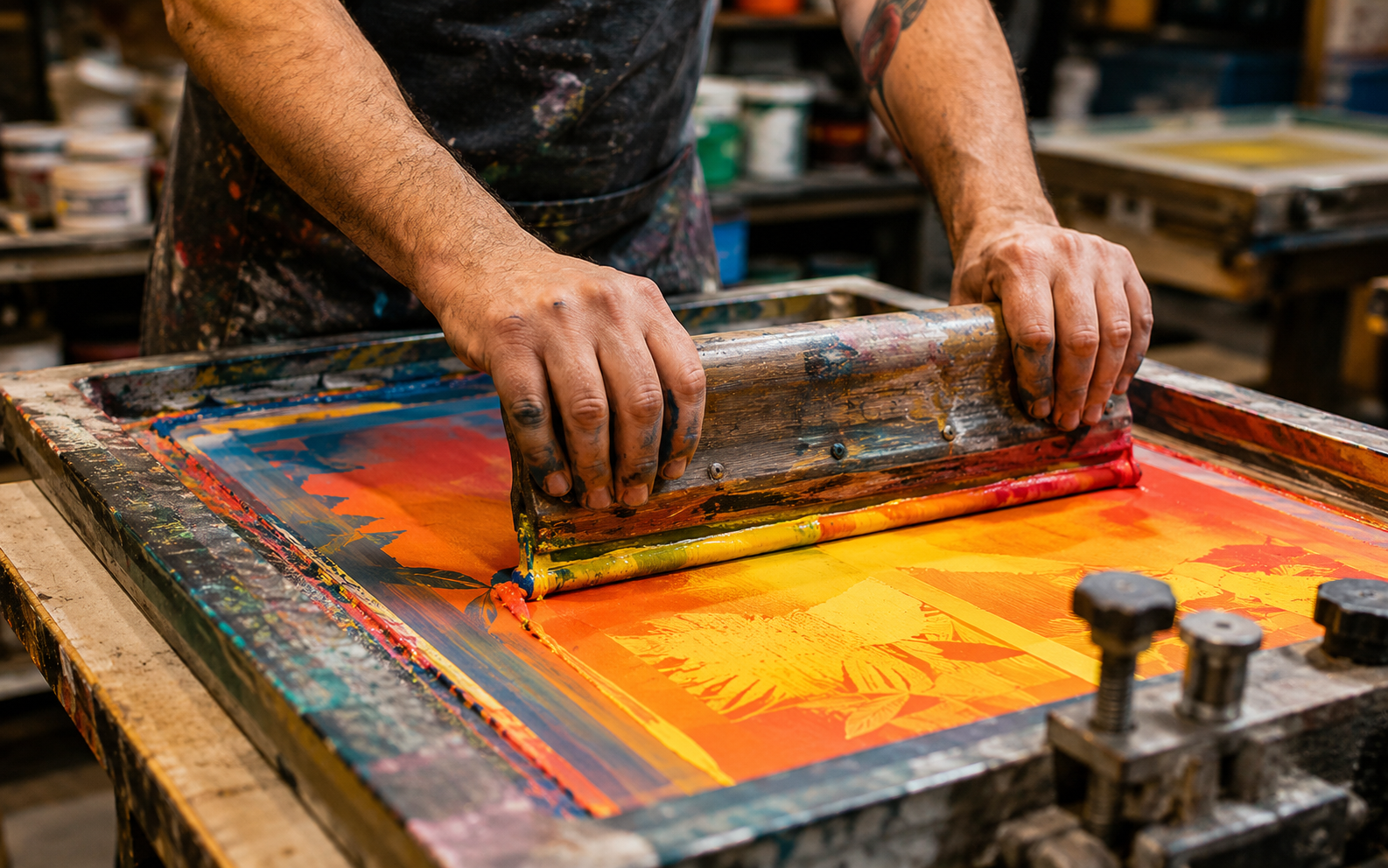
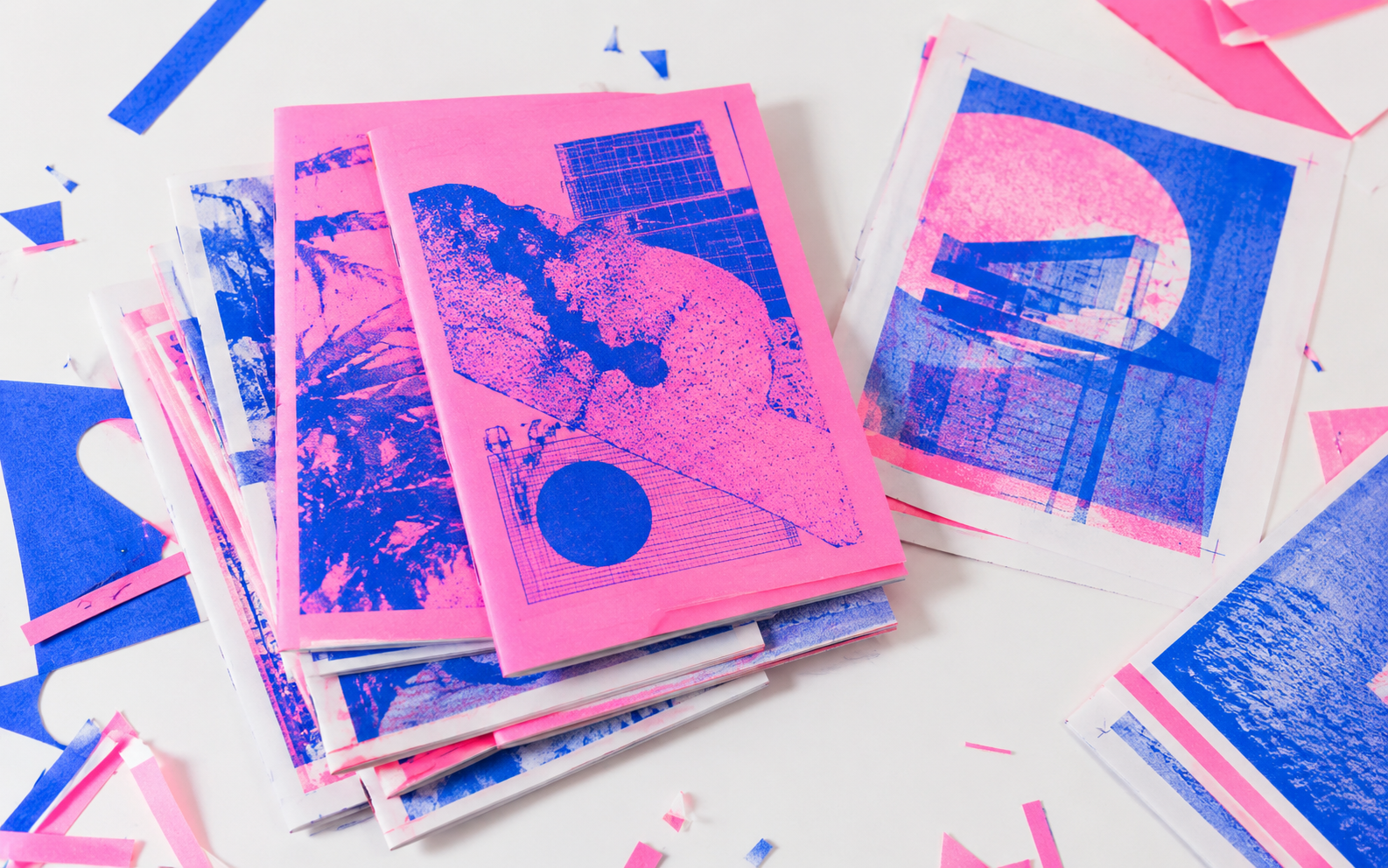
Walk into an indie print studio and you might find a dizzying array of equipment: a Vandercook letterpress from the 1950s, a risograph machine rescued from a shuttered school district, a vacuum exposure unit for screen printing, a flatbed etching press for intaglio work. Many studios specialize in one technique, but the most versatile operations maintain equipment for several, allowing artists to choose the method best suited to their project.
Much of this equipment is vintage, no longer manufactured, and maintained through a combination of mechanical ingenuity and a robust informal network of printers who share parts, manuals, and troubleshooting advice. There is something deeply appealing about this — machines built to last being kept alive by people who care about what they produce.
The Business Model
Running an indie print studio is not a path to wealth. The margins are slim, the hours are long, and the work is physically demanding. Most studio operators supplement their contract printing with their own art editions, workshops, and sometimes retail sales of paper, ink, and supplies. Some have found creative funding models — artist residencies, grant-supported community access programs, or partnerships with local arts organizations.
Despite the economic challenges, new studios continue to open. The barriers to entry are relatively low compared to other creative businesses, and the demand for quality short-run printing shows no signs of diminishing. As long as artists want to make physical objects — and audiences want to buy them — indie print studios will have a role to play.
Why They Matter
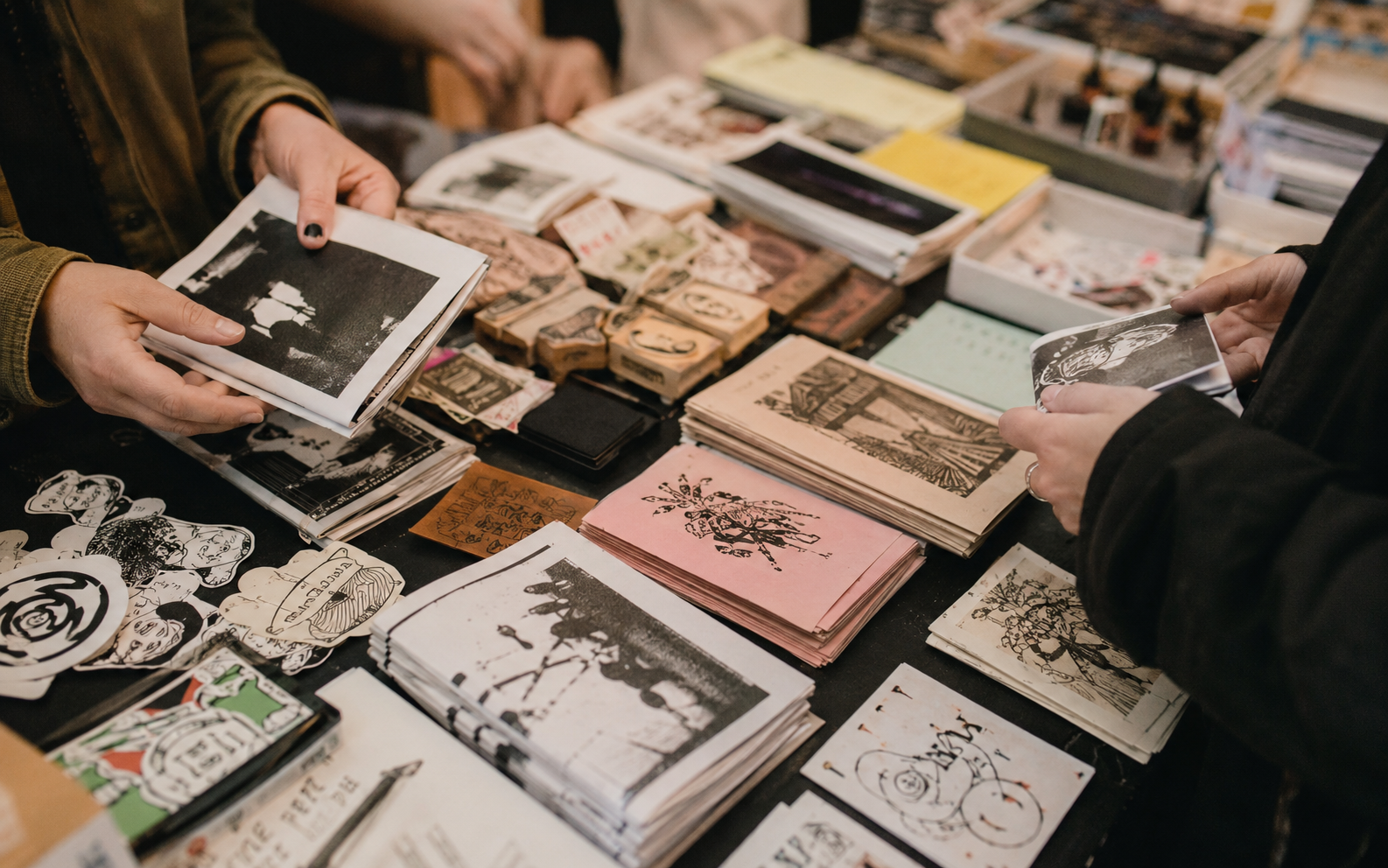
Indie print studios serve a function that goes beyond producing pretty objects. They are knowledge repositories, keeping alive printing techniques that might otherwise be lost. They are community hubs, bringing together artists who might never cross paths in the siloed world of contemporary art. And they are economic engines, however modest, for the neighborhoods they inhabit. In an art world increasingly dominated by digital platforms and global supply chains, the indie print studio is a refreshingly local, human-scaled institution.